Date: 30/06/2026
Author: Laura Kearney, University of Portsmouth
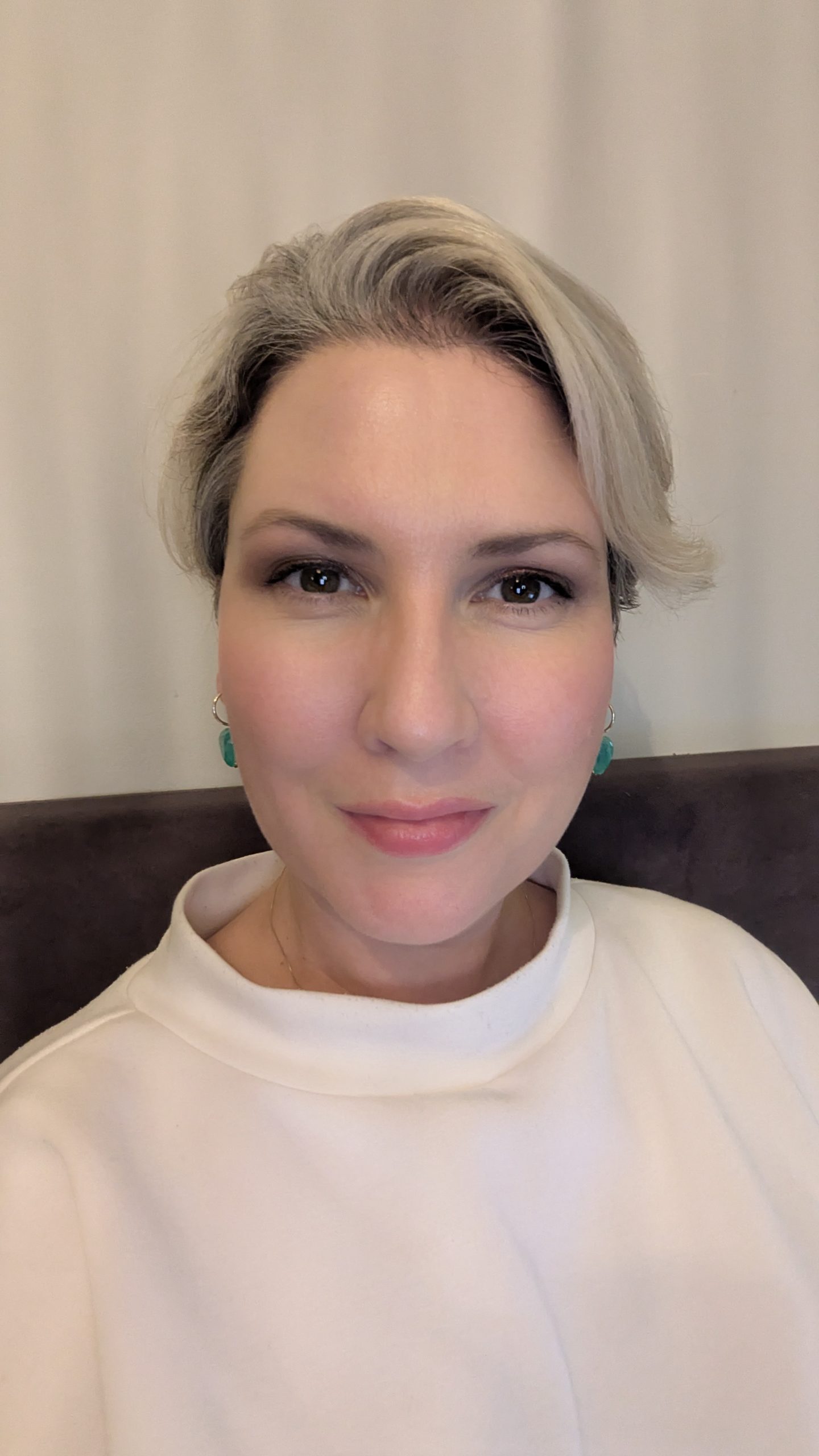
Bio:
Laura Kearney is an SCDTP-funded first-year psychology PhD student in the Faculty of Science and Health at the University of Portsmouth. Following on from her master’s degree in health psychology, her main research interests are weight and health, women’s health and the socioeconomic determinants of health. Her PhD project focuses on weight bias in secondary schools. As of May 2026, she has published her first paper as lead author, based on her master’s research on PE teacher trainees’ appearance-based conceptualisations of health. Alongside her PhD, she is pursuing the Stage 2 Health Psychology qualification.
As part of the SCDTP Research in Practice (RiP) Research Assistant Placement (RAP) scheme, I applied for a placement as a research assistant at the University of Southampton. The project focused on science education and, while not aligned with my research area per se, I was drawn to this opportunity because I felt it would allow me to strengthen certain research skills. As someone who returned to higher education after several years and had observed that many of my peers seemed to have at least some research assistant experience, I sometimes felt a little underexperienced by comparison. I saw this as an opportunity to work in a bona fide academic research team that would not only strengthen my research skillset but also build my confidence as a researcher. I have a deep regard for the work that teachers do, coming from a family of educators and having trained as a primary school teacher myself, and so the placement also aligned with my values around education. Together with my previous experience in project management, I felt I could bring an understanding of not only classroom realities but also of complex, multi-stakeholder environments outside of academia.
My objectives going into the placement were fourfold. I wanted an authentic experience of being a research assistant, moving out of the self-directed mode of doctoral study and into a team with shared deliverables and deadlines. I also wanted to strengthen my qualitative research skills, particularly interviewing and analysis, since both are central to my own PhD. I saw it as a chance to expand my network and, as the placement advertisement had mentioned the possibility, I hoped to contribute to a publication. As all academics are keenly aware, publication holds an important place as a marker of progress, especially for an early-career researcher trying to build an academic profile.
The project itself, led by Dr Wonyong Park at the University of Southampton Education School, aimed to strengthen evidence-informed practice in UK science education by helping teachers to engage more effectively with research, with a practical toolkit and continuous professional development (CPD) as the intended outputs. My PhD project focuses on reducing weight bias and improving how weight-based bullying is handled in secondary schools. While this is a different substantive area, my research shares the central concern of closing the distance between what researchers produce and what gets used in practice, and I too hope to create a deliverable such as a toolkit or CPD for teachers.
In the first couple of weeks, I worked to bring myself up to speed on the project, which included reading about the project background and associated literature, looking through previous meeting minutes, and getting to grips with how a multi-partner project runs. Even with a project management background, I encountered tools I hadn’t formally used, such as the RACI matrix for clarifying who is Responsible, Accountable, Consulted and Informed on each task. I also made a point of networking beyond the immediate project, and an early conversation with the SCDTP Director, Professor Athina Vlachantoni, opened up a possible volunteering role on her own research within secondary schools. This was a reminder that being visible and engaged, and putting yourself out there (even when it feels daunting) can really pay off.
My first significant deliverable was a desk review of evidence-informed practice in science education. I presented this review online to the whole team which included academics from the University of Southampton, King’s College London, and the Association for Science Education. I was anxious about presenting to senior academics generally, but especially in a field that was new to me. However, the reception was warm and encouraging and underscored for me that contributing to a team isn’t always about being the most expert person in the room. A fresh perspective can have its own value.
Alongside the main project, Wonyong invited me to work on a qualitative review of twelve Research Excellence Framework (REF) impact case studies, examining how science education research impact is framed and narrated. This was the most demanding part of the placement and involved careful, time-consuming work. We established inter-coder reliability by coding a small number of the same case studies, then split the remaining case studies between us to code individually. Wonyong used specialist software while I worked mostly by hand, and it surprised me how closely our coding aligned despite the difference in approach. It prompted reflection on when software adds value in qualitative analysis and when it risks putting distance between the researcher and the material. It also provided an opportunity to consider the importance of how research impact is articulated, and of keeping this in mind throughout the process. And of course, it will hopefully lead to another publication.
Part of the project involved interviews with policy makers, however, Wonyong wanted to expand this to include follow-up interviews with science teacher survey participants. My addition to the research team made this possible and meant that we could conduct more interviews than previously planned. It felt good to see that I was able to add value in such a concrete and demonstrable way. I owned the full cycle for this aspect of the work, contacting participants, scheduling, interviewing, transcribing and following up with thank-you vouchers. Drawing on my teaching background, I also worked with Wonyong to revise the interview questions designed for policymakers, to make them more accessible to practitioners. On a personal level, hearing teachers describe the constraints they work under reinforced for me exactly why this kind of research matters.
I would say the placement exceeded my expectations, and I am grateful that this opportunity is built into the SCDTP PhD studentship. It provides hands-on experience that is often lacking in higher level education, which not only allows for real-world skills development, but also strengthens one’s network and builds one’s CV for future employment. I had the opportunity to be a member of a research team producing tangible outputs (one of which, the toolkit, is now out there in the world with my name among the authors). I was given meaningful work from day one and my contributions were taken seriously. Having conducted interviews in a professional context, I feel an increased level of practical readiness for my own data collection. The balance of intellectual challenge and practical, applied work was exactly what I had hoped for.
If I were to critique the experience at all, it would be to say that I would have valued some quantitative work and experience with qualitative analysis software. But these are gaps that I will have ample opportunity to work on with training offered both by the SCDTP and by the University of Portsmouth. The placement also prompted reflection on academic careers. Observing the competing demands on my supervisors has raised questions for me about work-life balance in academia, something that I will continue to reflect on as I proceed through my PhD and move forward into the post-doc world.
And so, the placement ended and I was slightly concerned about how long it might take to regain momentum in my PhD work. Luckily, I went from placement directly into the SCDTP Cumberland Lodge residential, which offered the perfect transition. I reconnected with my fellow postgraduate researchers and eased myself back into PhD mode. I returned from my placement with a clearer sense of what applied, collaborative research looks like and a renewed desire for my own work to be impactful, lofty as that goal may seem!